Telephone: +44 (0)1623 511 111
Lowering headframe masts
Latching option
The engineered headframe, with its secure three-pulley system, is available with or without our innovative latching system. A single multi-core electric cable has its own independent pulley, meaning it doesn’t become entangled with other cables in the mast.
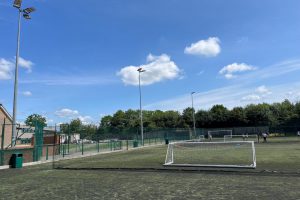
The Abacus headframe offers flexibility through the opportunity to add a latching mechanism to the headframe, enabling it to be supported while raised and removing strain on the stainless steel cables, for long term benefits.
Step 1
Latch engages when mobile headframe is raised towards mast head.
Step 2
Once mobile headframe has docked, latch engages, raising a flag confirming to the operator that it’s secure.
Step 3
Mobile headframe is raised to disengage latching, before being lowered to ground level for maintenance.
Features
- Headframe supported by three stainless steel cables for longer-term stability than twin cable systems
- Option to install mechanical latching system on three arms, to release strain on cables when headframe is in the operating position
- Headframe supplied prepared ready for installation, complete with three cables looped for dropping into the mast shaft and junction box for the multicore cable mounted on headframe
- Single 275Kg or single 550Kg winch located in the base of the mast. The winch is self-sustaining, with a gravity latch on the input shaft
- A 10mm earth terminal is provided in the base of the mast
- Single multicore cable for all lanterns is located on an independent pulley, stopping multiple cables from becoming entangled inside the mast
- Single multicore - with 18 cores on the 275Kg winch mast (for up to 8 floodlights/lanterns), or 25 cores on the 550Kg model (for up to 12 lanterns)
- A multicore electric cable, with integral signal cables for CCTV and WiFi, is available on request
- Electrical cable is supplied with a plug and socket at lower end. This means you can detach the cable and power the headframe at ground level using a separate extension cable
- A lightweight dual-speed reversible power tool is supplied with its own mounting bracket, which is clamped directly to the body of the mast. A remote hand-held box with non-latching buttons controls the unit, enabling the operator to stand at a safe distance when lowering.
Building your mast
Step 1
- Identify the correct Abacus floodlight from the lighting design and then…
Step 2
Select the correct headframe option based on:
- the floodlight arrangement
- external IP65 or internal control gear (internal gear only available with Challenger® 4)
Step 3
Select the central assembly code determined by:
- mast height e.g. 30m is RLW-HF-30M-xxx-xx
- multicore electric cable, for 275kg winch is 18core (18C) & 550kg winch is 25core (25C); e.g. RLW-HF-30M-18C-XX
- whether the latching system is required (-L) or not (-NL); e.g. RLW-HF-30M-18C-NL
Note: the central assembly is delivered to site fully assembled with stainless steel cables and multicore cable factory-assembled ready for immediate installation.
Step 4
Select the correct mast structure based on:
- mast height
- winch capacity (determined by headframe choice)
- site wind speed and headframe area
For each height and winch capacity there is a light duty and medium duty mast option, which covers most requirements. Other mast structures for higher wind loads are available on request.
Step 5
Select any necessary accessories for example:
- the floodlight mounting bracket, required if a floodlight with stirrup is selected (not necessary for the Challenger® 4/RLW model)
- Power tool operating system, dependent on winch capacity
- Lightning rod